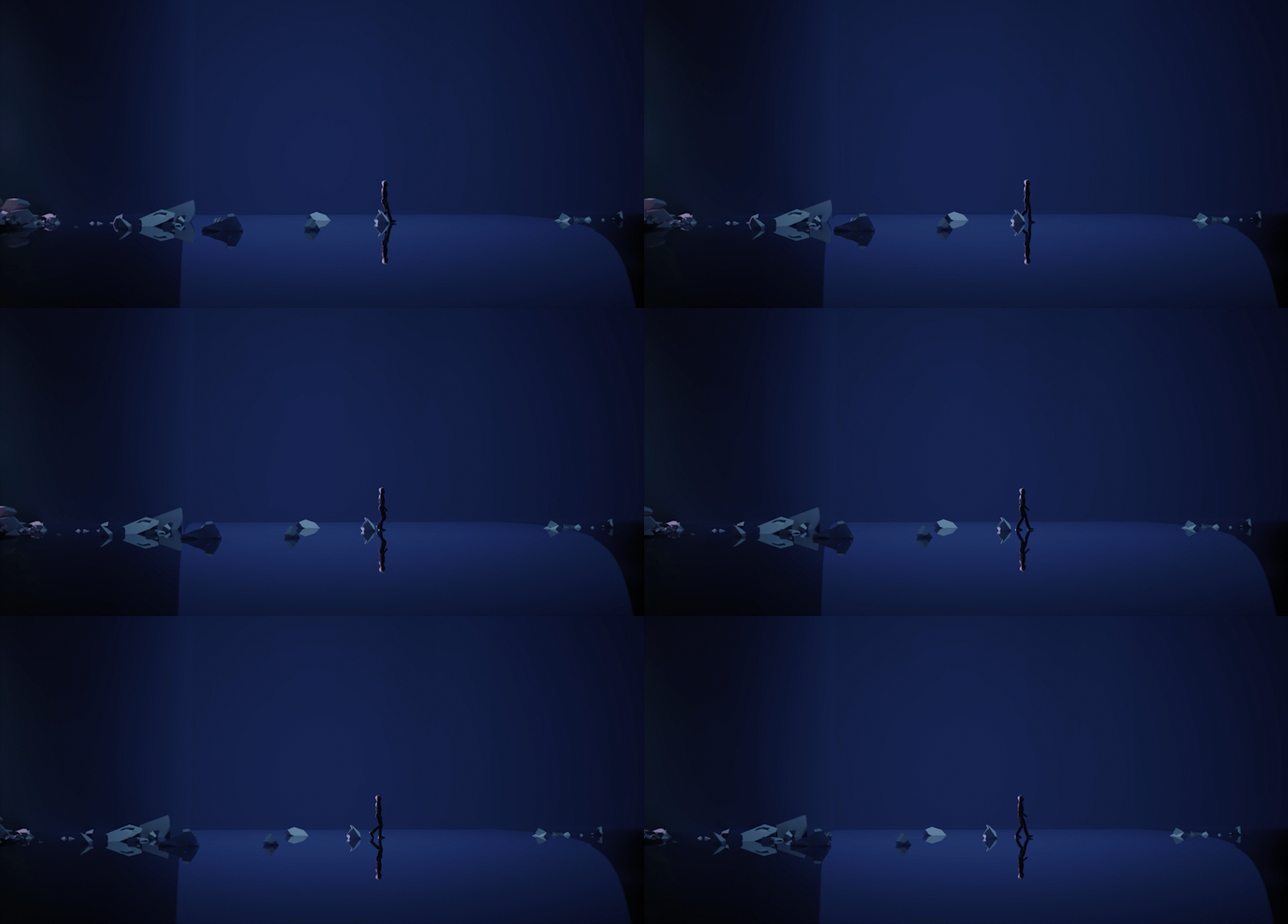
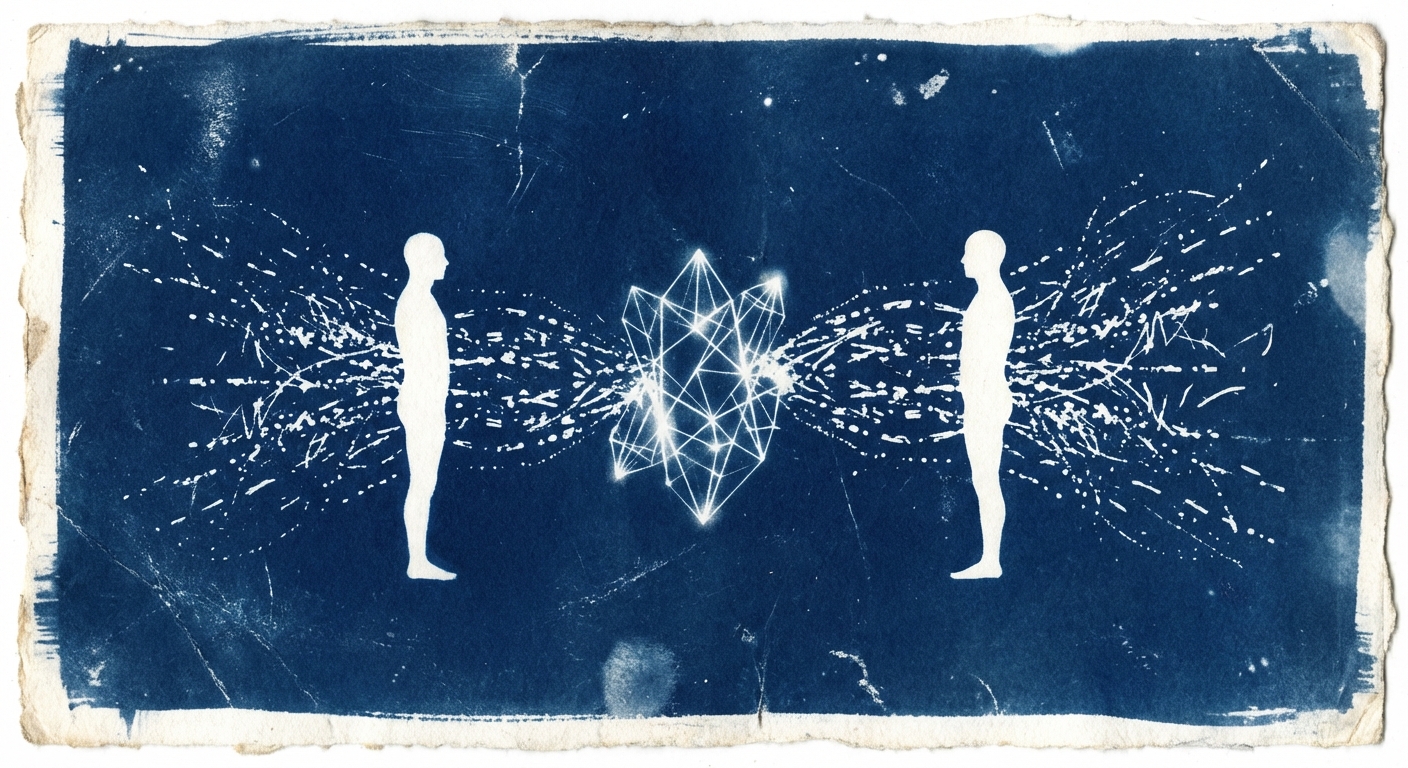
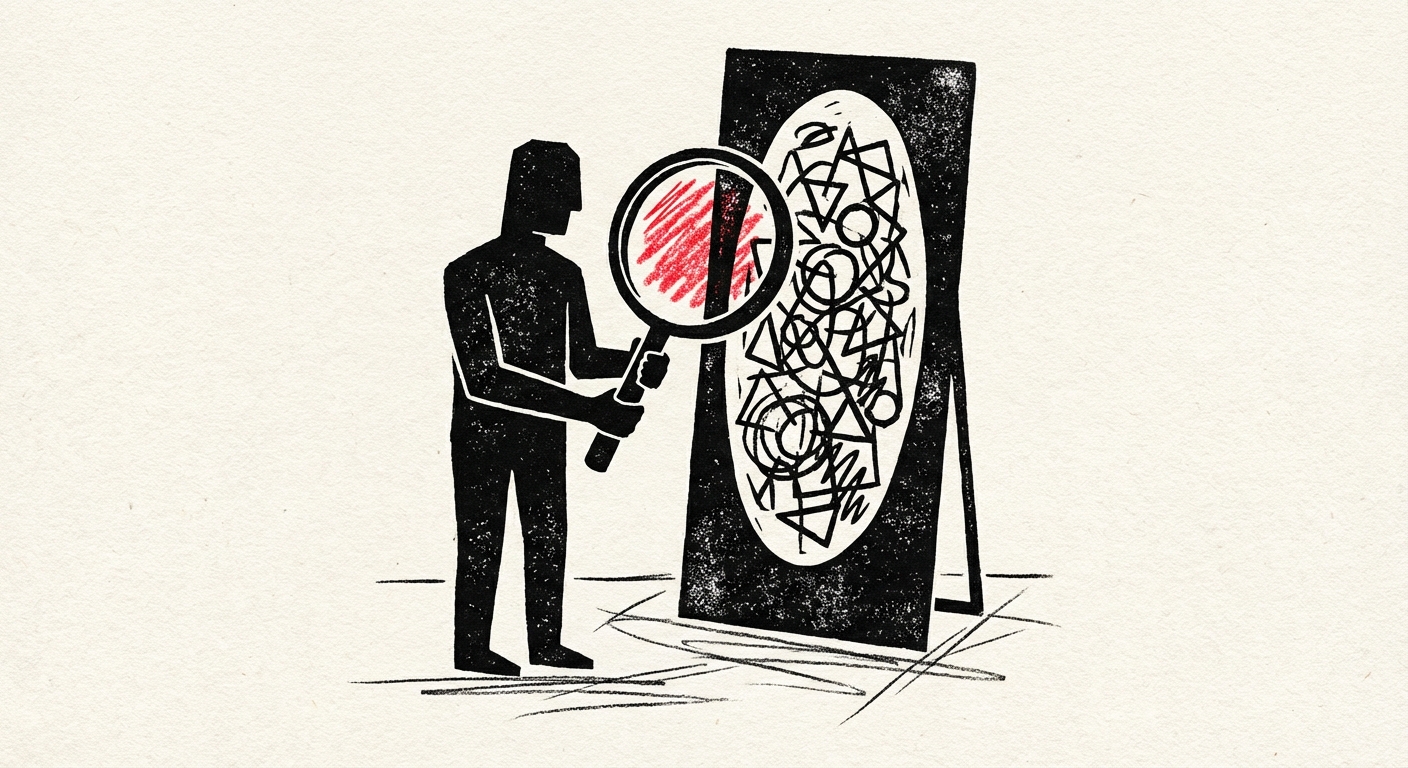
Born from experiments in Unreal Engine, motion capture, and charcoal animation, this project became a lesson in trusting my instincts, embracing uncertainty, and letting the creative mess show.
This was a big one for me.
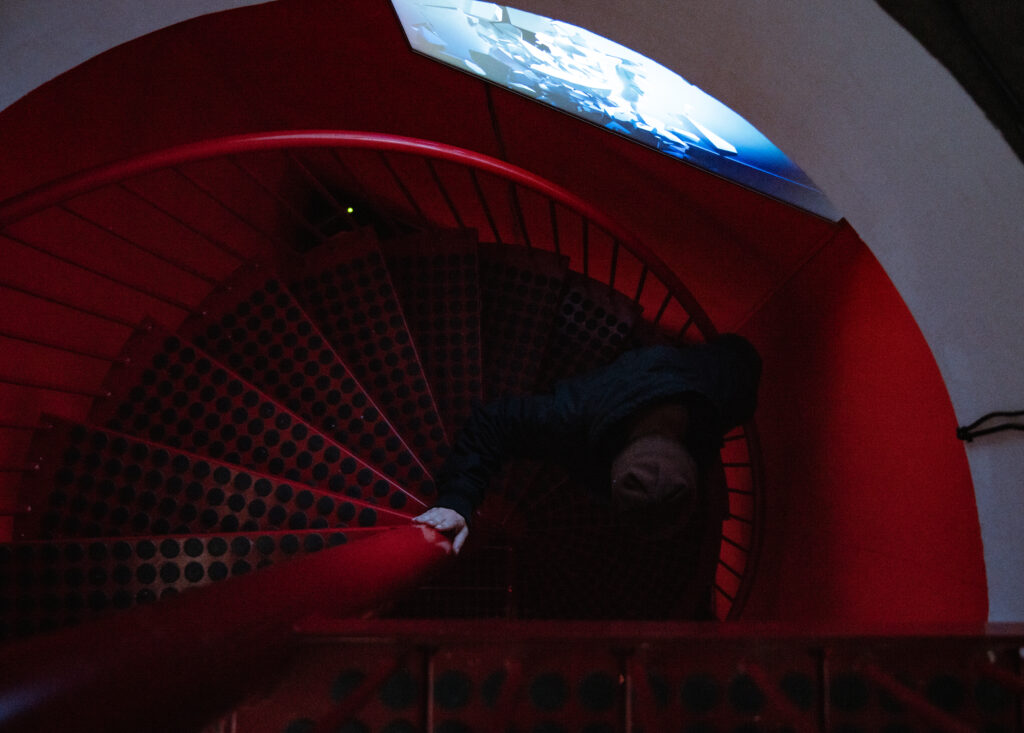
Three months of climbing — not the graceful kind, but the kind where you scrape your knees, doubt your route, and keep going anyway. The result: a sprawling installation woven through Concordia’s red spiral staircase during Museumnacht Enschede. Six screens, one large projection, all playing looping fragments of a story about creativity, identity, and the strange creature called ego that trots behind us wherever we go. My own music filled the air, wrapping around the architecture so that the building became part of the work.
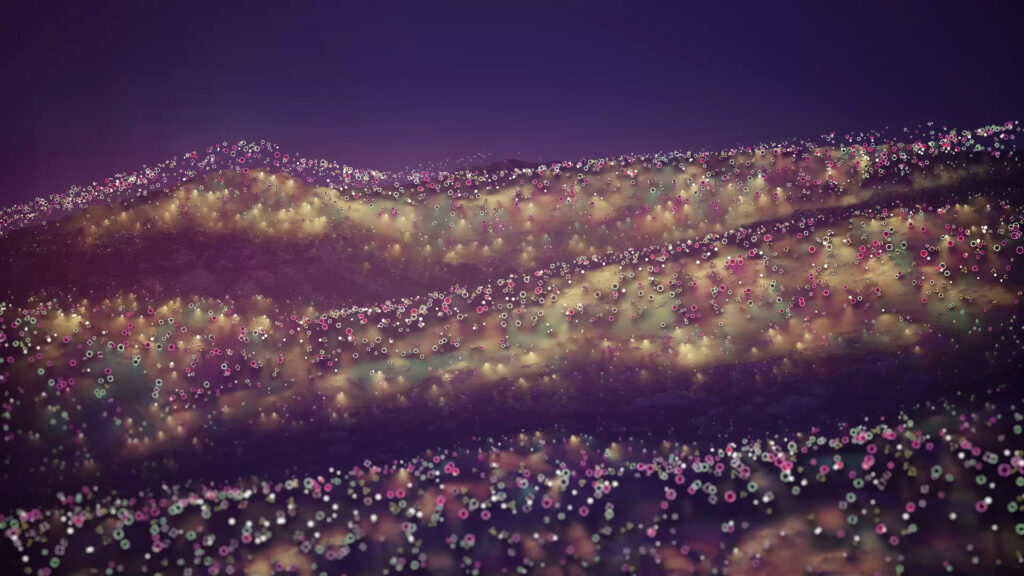
Created with Unreal Engine and Charcoal
The piece was born out of experiments in Unreal Engine, motion capture, charcoal animation, and semi-linear storytelling. It was also born out of stubbornness, uncertainty, and the occasional wrong turn.
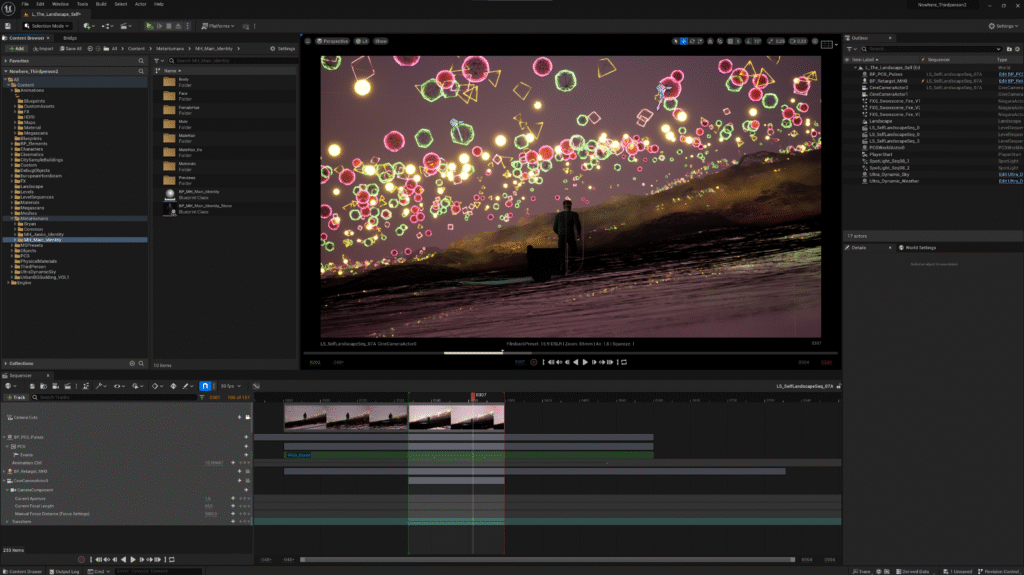
Process
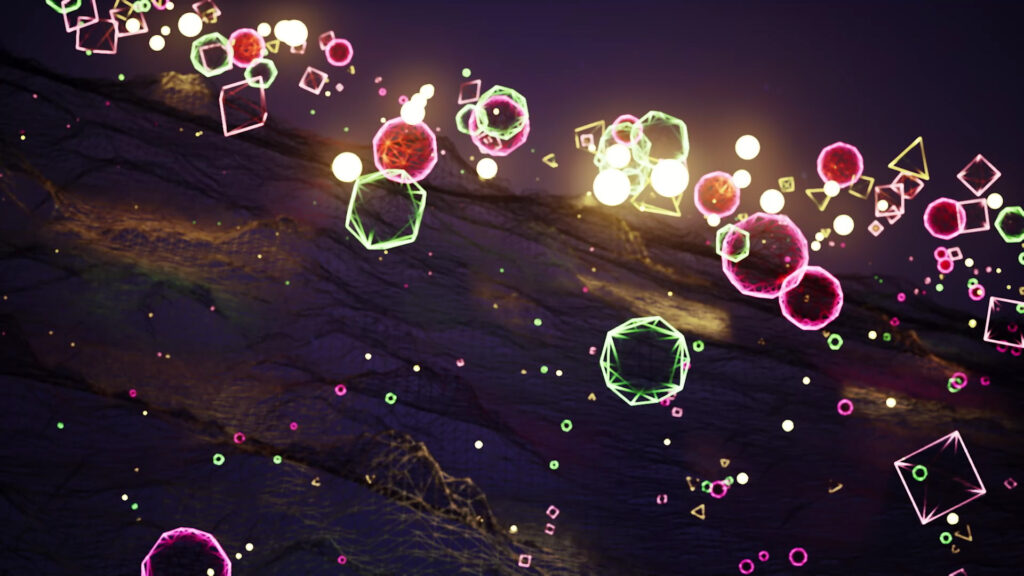
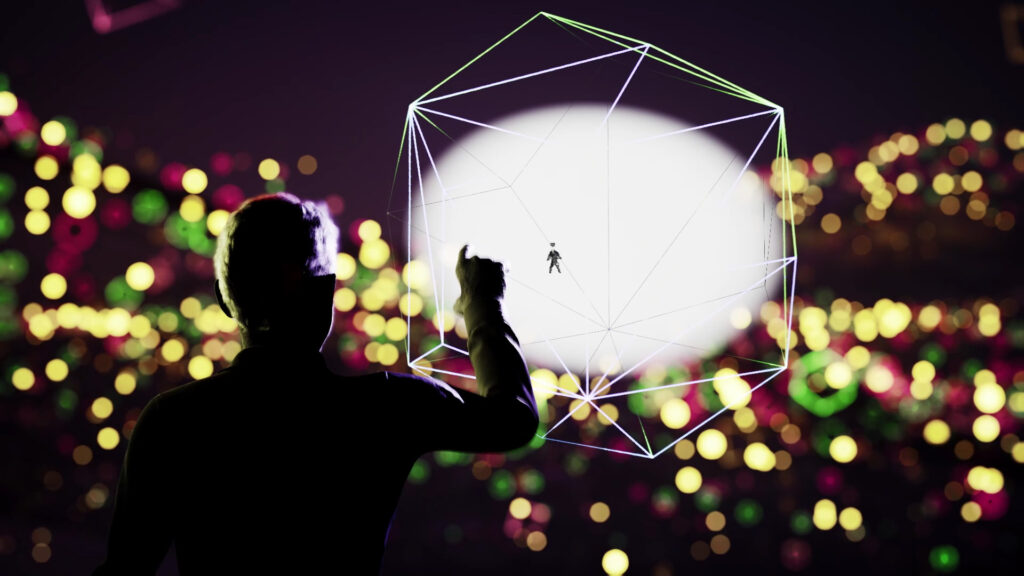
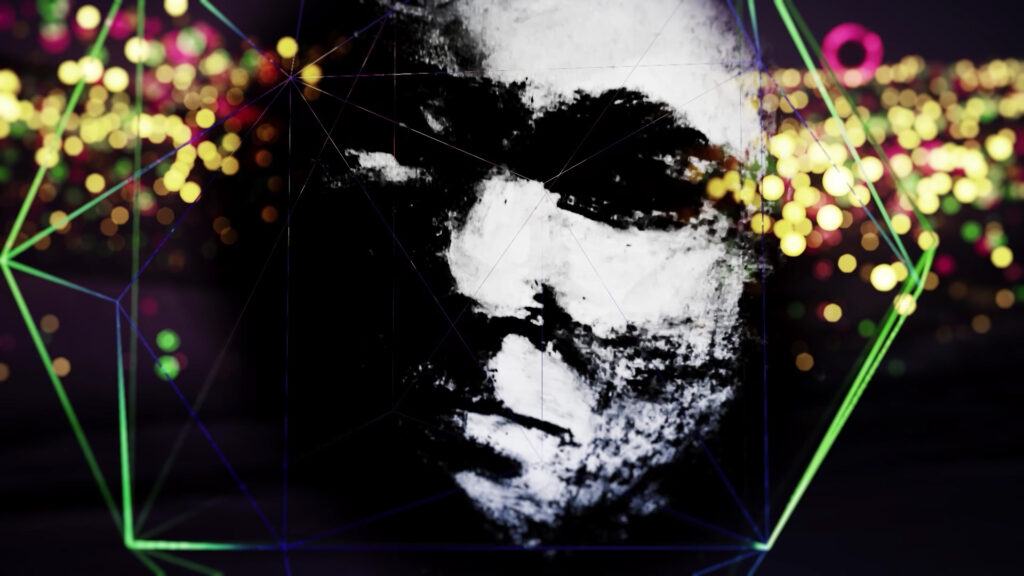
I built a world from my own face. Literally — scanned contours became mountain ranges in World Builder, skin texture reimagined as alien geology. My movements were captured with Rokoko hardware and software, translating muscle and hesitation into digital gesture. For the hand-drawn charcoal animations, I worked with a custom stop-motion rig — hundreds of frames, each grain of charcoal a small act of erosion and creation.
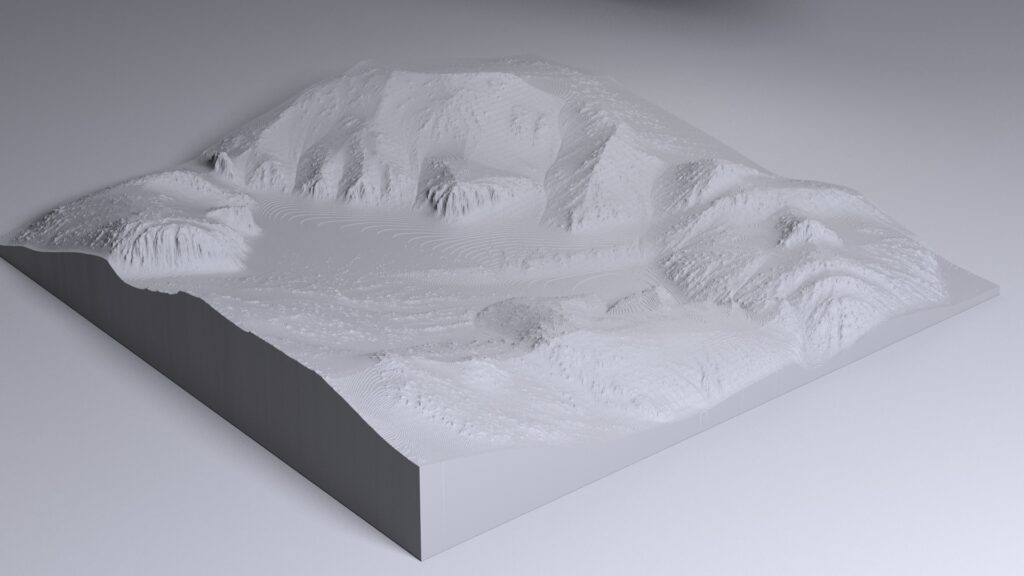
I mapped the exhibition in Cinema 4D, pre-walking the visitor’s path in virtual space. Unreal Engine became the heart of the build: sculpting, lighting, texturing, and animating the world, with photorealistic rendering fast enough to encourage reckless iteration. Color, edit, and VFX passed through DaVinci Resolve, After Effects, and Premiere. The soundtrack grew in Ableton Live, stitched from synths, samples, and a small army of hardware and software instruments — a soundscape breathing in time with the visuals.
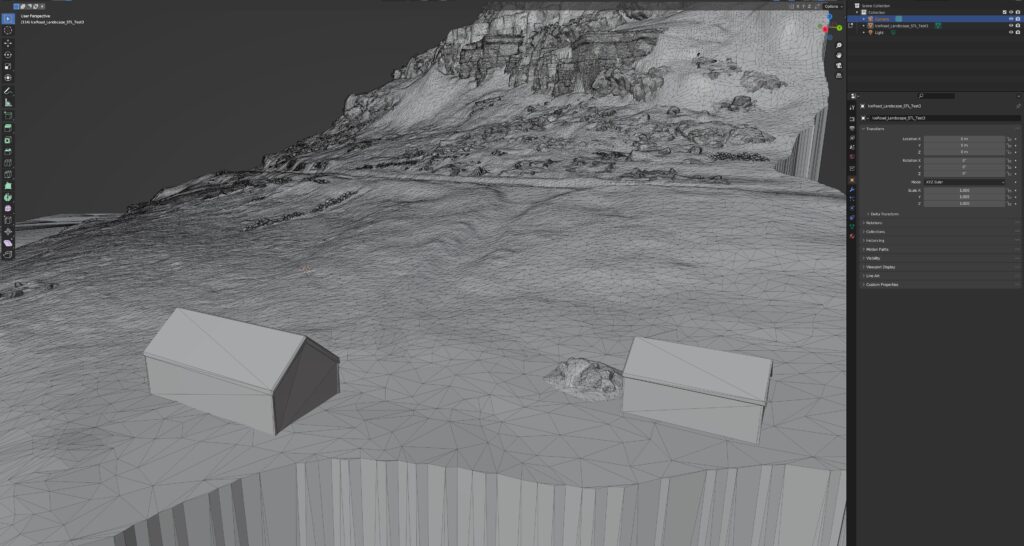
Every tool helped me look a little closer and piece things together. Some days it was about fixing what didn’t work, other days it was about following a hunch just to see where it went. Bit by bit, the work took shape — less like building from scratch, more like uncovering something that was already there.
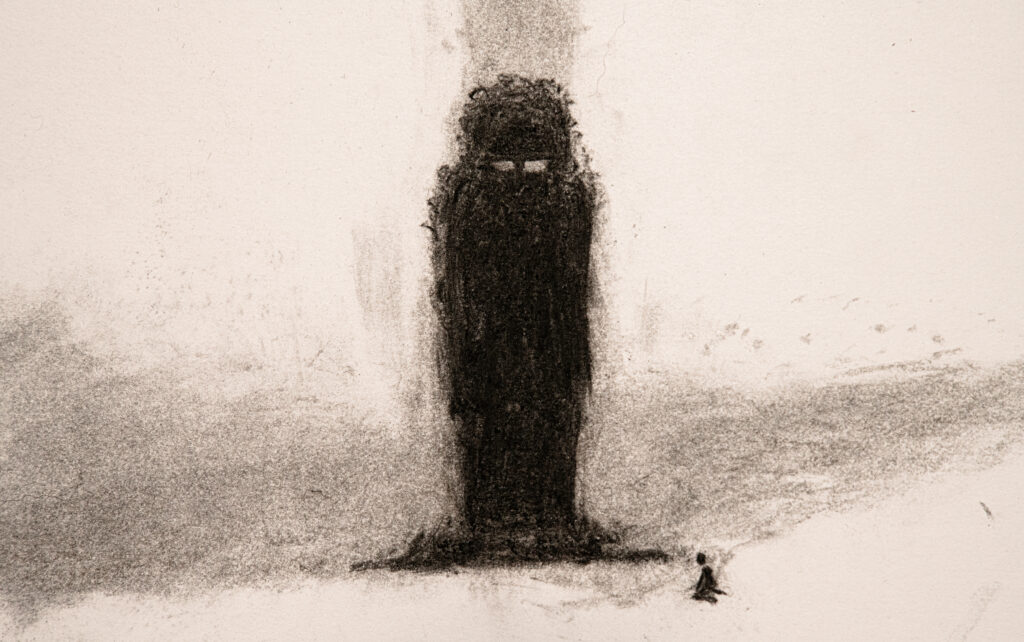
I chipped away at it, eroding what didn’t belong, reusing what did, collaging fragments into new constellations. I circled back, changed my mind, learned something, unlearned something else. In the end, the process felt less like making and more like finding.
That’s the thing about ego — you only see the dog clearly when you look back.
I left this project with a backlog of ideas — ten different paths I still want to explore, in new spaces and forms. Maybe next time the dog will follow a little further behind. Or maybe I’ll let it run ahead and see where it takes me.
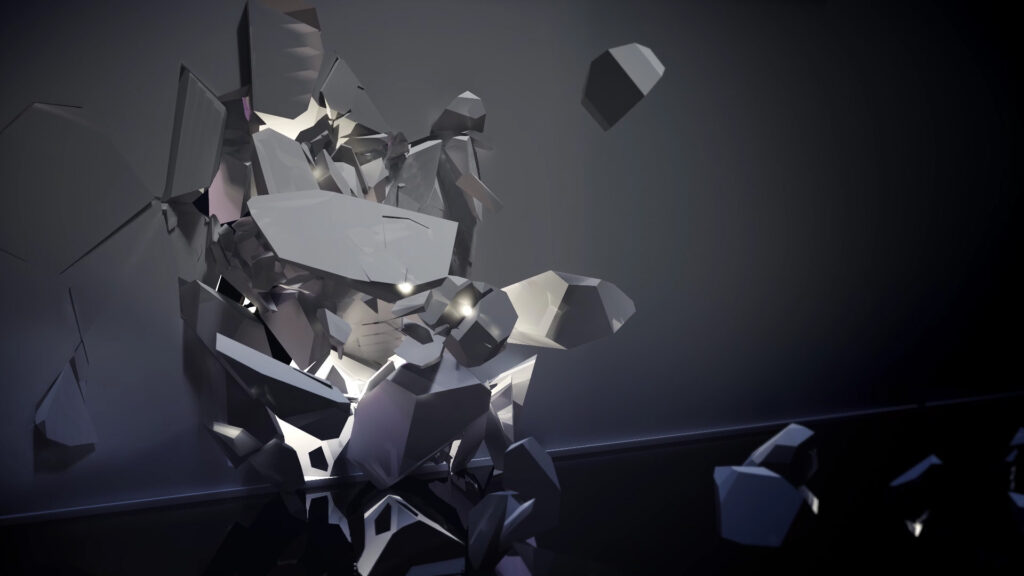
In hindsight, I wish I’d trusted my own instincts more and embraced the discomfort instead of sanding it down. If I had, maybe the work would have carried even more of the openness and vulnerability I felt in the making. But that’s the thing about ego — you only see the dog clearly when you look back.
And still — I’m proud. There are moments in this project I wouldn’t change for the world. Images and sequences that still hum with life. A rhythm in the way visitors moved through it. Unexpected connections. It taught me to break and rebuild my own creative process, to accept that the mess is part of the climb.